
How Many Units Can I Build on My Property?
One of the most common questions landowners and developers ask is: “How many units can I build on my property?”
Whether you are evaluating land for townhomes, multifamily housing, or a small subdivision, determining the potential development yield of a property is a critical first step before purchasing or designing a project.
The number of units that can fit on a property depends on several factors including zoning regulations, infrastructure availability, site conditions, and parking requirements. Understanding these constraints early can prevent costly surprises later in the development process.
Below are the key factors that determine how many units can be built on a site.
Zoning and Density Regulations
The first and most important factor is local zoning regulations.
Zoning determines the maximum residential density, allowed building types, minimum lot sizes, building height limits, and setback requirements.
For example, a property zoned for multifamily residential may allow higher density compared to land zoned for single-family housing.
However, even when zoning allows a certain number of units per acre, real-world constraints often reduce the final unit count.
Setbacks and Buildable Area
Setbacks determine how far buildings must be from property lines, roads, adjacent properties, and environmental features such as streams or buffers.
These requirements reduce the total buildable area of the site.
For example, a three-acre property may appear large enough for dozens of units, but setbacks, buffers, and access requirements can significantly reduce the space available for development.
Parking Requirements
Most municipalities require a minimum number of parking spaces per residential unit.
Typical requirements include two spaces per townhome or between one and two spaces per apartment unit, often with additional visitor parking.
Parking areas, drive aisles, and internal circulation routes often consume a large portion of a development site. For many projects, parking requirements become one of the biggest limitations on the number of units that can be developed.
Utilities and Infrastructure
Infrastructure availability can significantly impact development potential.
Key utilities include water service, sanitary sewer, storm drainage systems, and electrical infrastructure.
In some cases, sewer capacity or utility conflicts may limit the number of units that can be supported on a property. For example, shallow sewer lines or existing underground utilities can require design changes that reduce the number of buildable units.
Site Topography and Natural Constraints
Every property has physical characteristics that affect development feasibility.
These may include steep slopes, floodplains, wetlands, streams or drainage corridors, and existing easements.
These conditions can reduce the effective buildable area and impact the overall development layout.
Internal Roads and Access Requirements
Most developments require internal roads, fire access lanes, turning radii for emergency vehicles, and pedestrian connectivity such as sidewalks.
These infrastructure requirements take up space and can reduce the total number of residential units that fit on a site.
Development Yield Analysis
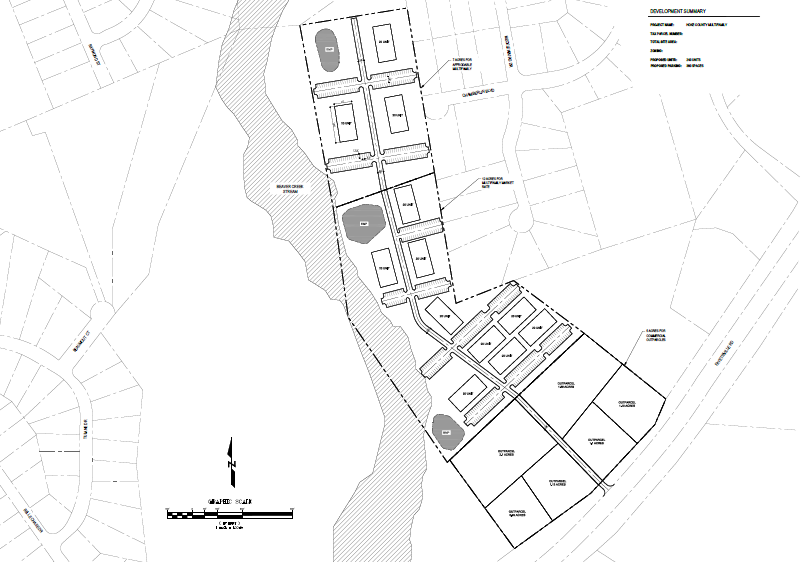
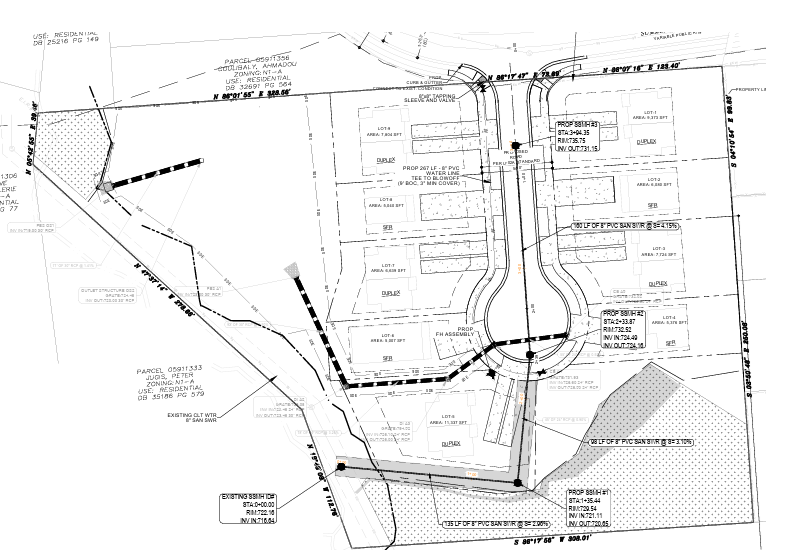
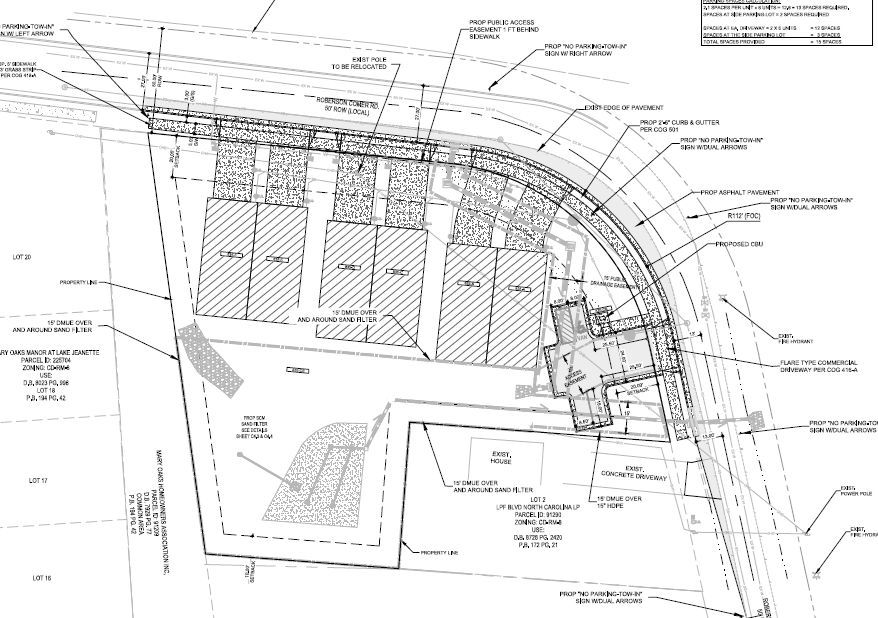
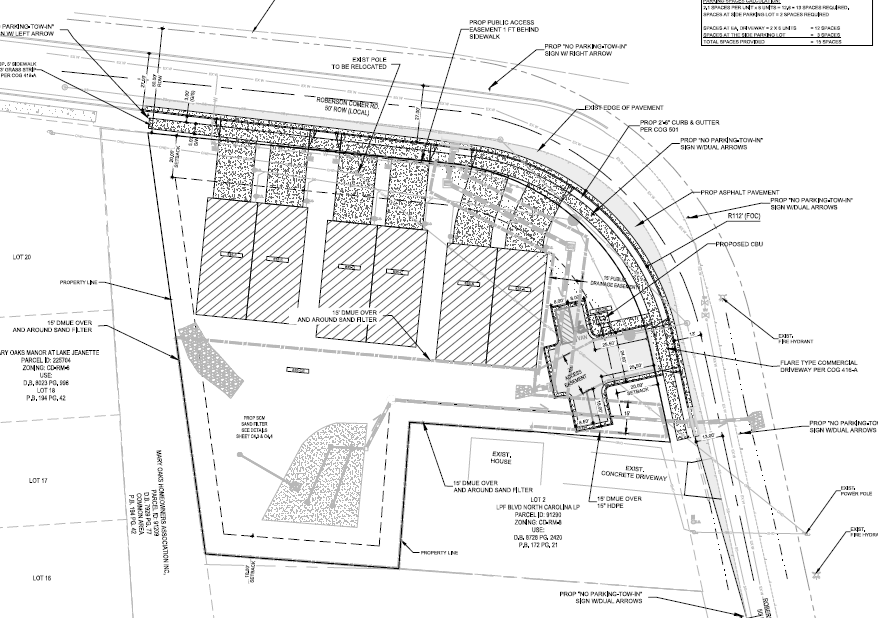
Because of all these factors, determining how many units can be built on a property usually requires a yield analysis.
A yield analysis evaluates zoning density, setbacks and buffers, parking requirements, utility infrastructure, and site constraints.
This process produces a conceptual layout showing how units could realistically fit on the property and helps developers answer critical questions before purchasing land or investing in full engineering design.
Why Early Site Feasibility Matters
Many development projects encounter problems because key issues were not identified early.
Common issues include unexpected utility conflicts, insufficient sewer capacity, storm drainage challenges, grading limitations, and agency approval constraints.
Evaluating these factors before moving into design can save significant time and cost.
How SL Advisory Helps Developers Evaluate Land
SL Advisory provides early-stage development feasibility reviews that help developers understand a property’s potential before moving into engineering design.
Our evaluations include zoning and density analysis, preliminary unit yield assessments, utility availability review, infrastructure considerations, and identification of potential development risks.
These assessments help developers make informed decisions when evaluating land for acquisition or development.
Final Thoughts
Determining how many units can be built on a property involves more than simply dividing acreage by zoning density.
Site constraints, infrastructure requirements, and regulatory limitations all play a role in determining the final development yield.
Conducting a feasibility review early in the process can help identify opportunities and avoid costly issues later in the project lifecycle.
Contact SL Advisory
If you are evaluating a property and want to understand its development potential, SL Advisory can help.
Our feasibility reviews provide developers with the information needed to make confident decisions before moving forward with a project.
Contact SL Advisory to schedule a site feasibility consultation.